Electric Throttle Body Diagnostics: Beyond Cleaning
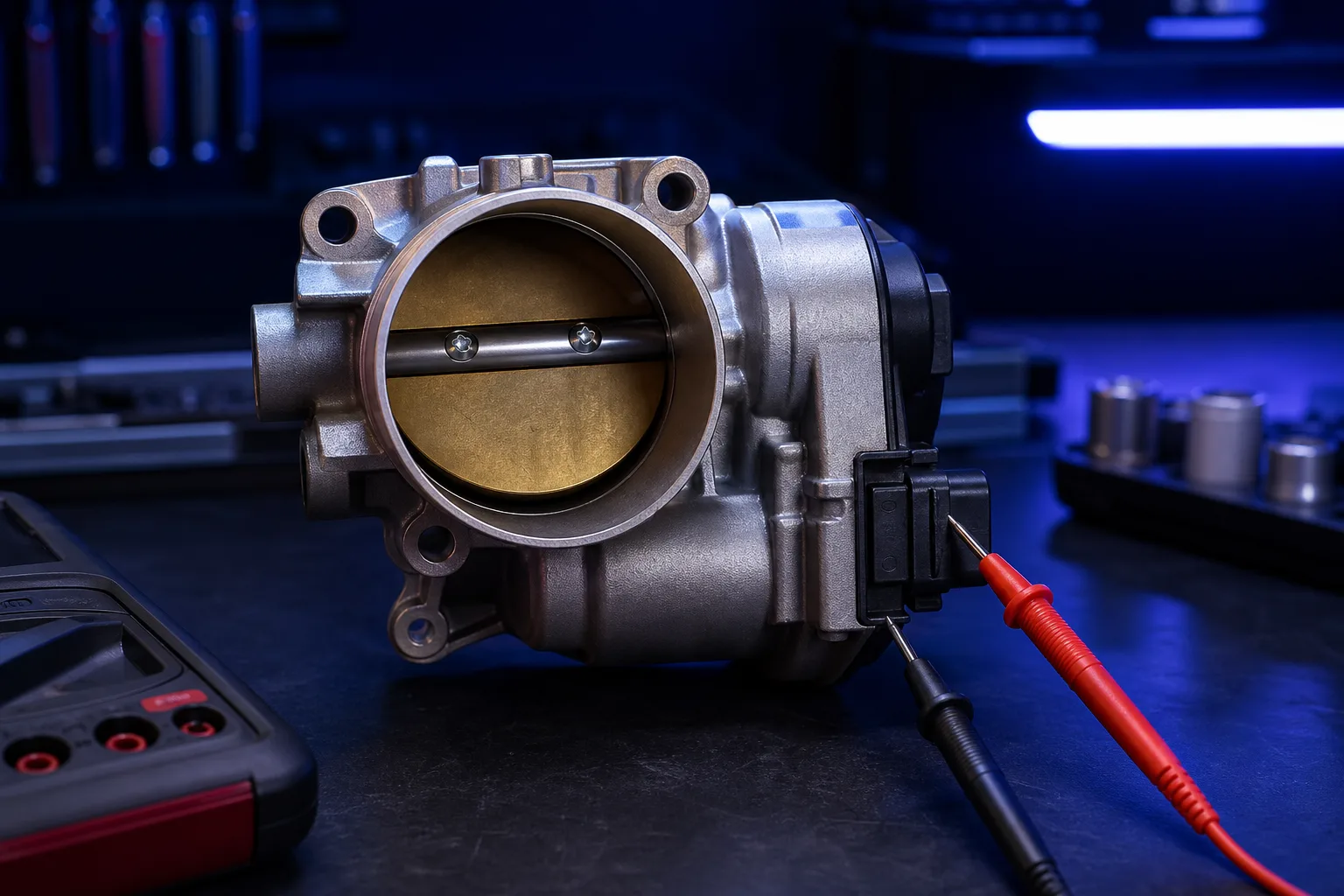
Many driveability complaints trace back to throttle bodies with integrated electric actuators — not cable-operated units from older platforms. Generic cleaning often masks symptoms without resolving the underlying fault.
How Electric Throttle Bodies Differ
Modern drive-by-wire throttle assemblies combine a butterfly valve, position sensors, and an electric motor in a single housing. The engine control module commands target throttle angle based on accelerator input, idle control demands, and torque management strategies. When any part of that loop degrades — sensor drift, motor wear, carbon buildup on the bore, or internal gear backlash — symptoms appear as idle instability, hesitation on tip-in, or limp-mode throttle restriction.
Cable-operated throttle diagnosis relied heavily on mechanical inspection. Electric units require scan tool access to commanded versus actual angle data, actuator current draw, and adaptation values stored in module memory.
Symptoms That Warrant ETB Testing
- Rough idle or idle surge after warm-up
- Hesitation when accelerating from a stop
- Illuminated check engine light with throttle-related codes
- Reduced maximum throttle opening with no pedal binding felt
- Failed emissions inspection due to idle control parameters
Scan Data Patterns to Review
Compare accelerator pedal position, commanded throttle angle, and actual throttle angle during key-on engine-off, idle, and light throttle application. Discrepancies between commanded and actual values beyond manufacturer tolerance indicate actuator or sensor faults. Monitor short-term and long-term fuel trim — excessive positive trim combined with airflow-related codes may suggest the ECU is compensating for airflow the throttle body is not delivering.
Review freeze-frame data from stored codes. If the fault occurred at low throttle angles during deceleration, carbon-related sticking is possible. If it occurred under load at higher angles, motor or gear wear becomes more likely.
Actuator Response and Cleaning Limits
A controlled actuator test through the scan tool sweeps the throttle plate through its range while monitoring position feedback and motor current. Sluggish response, hunting at fixed command values, or elevated current draw points to internal failure rather than contamination alone. Cleaning the bore may restore smooth operation when carbon restricts movement at closed throttle, but it cannot repair a failing motor or worn position sensor.
After any cleaning or component replacement, a throttle body relearn or adaptation reset is typically required. Skipping this step leaves the ECU working with outdated baseline values and often produces a recurrence of symptoms within days.
When Professional Inspection Is Warranted
If scan data shows persistent angle mismatch, repeated codes after cleaning, or actuator tests fail manufacturer criteria, replacement with a calibrated unit is usually the correct path. At telomeraseq, every ETB service includes pre- and post-repair data logging and a written expert conclusion documenting findings, procedures, and verification results. Contact our engine bay if your vehicle shows driveability symptoms that may involve the throttle assembly.