AWD Differential Maintenance: Front and Rear Reducer Service
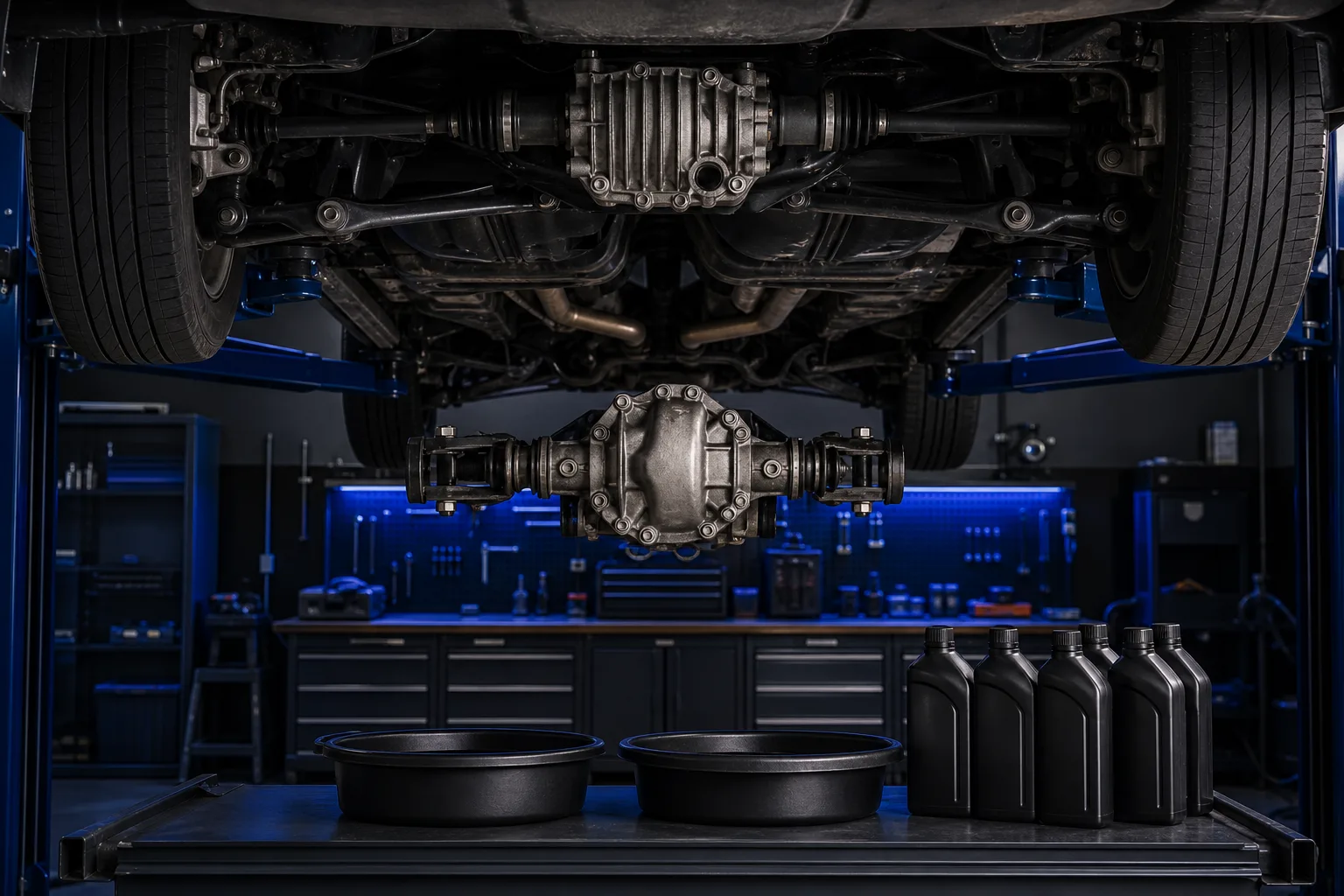
Full-time all-wheel-drive vehicles depend on front and rear differentials operating within tight fluid specifications. Breakdown products in old fluid are a common cause of hesitation under load that engine diagnostics alone cannot explain.
Role of Front and Rear Reducers
In full-time AWD architectures, power flows through a transfer case or center differential to front and rear axle reducers. Each unit contains hypoid gears, bearings, and clutch packs or viscous couplings depending on design. Fluid lubricates these components and carries heat away from friction surfaces during sustained driving.
When fluid oxidizes or accumulates metal particles, viscosity changes and lubrication efficiency drops. The result is binding under torque load — felt by the driver as a momentary lag when accelerating from low speed or climbing a grade.
Symptoms of Differential Fluid Degradation
- Brief hesitation or shudder when accelerating under load
- Whining noise that changes with vehicle speed, not engine RPM alone
- Binding sensation during tight low-speed turns
- Overheating transfer case on vehicles with temperature monitoring
- Metallic debris visible during fluid inspection
Why Factory Intervals May Be Insufficient
Manufacturer maintenance schedules assume typical passenger use. Fleet vehicles, delivery vans, and taxis operating in stop-and-go urban cycles place higher thermal load on driveline components. Fluid that meets interval requirements on paper may already show elevated particle counts and dark discoloration on analysis.
Commercial operators often benefit from shortened service intervals and fluid analysis before each change to track wear trends across a vehicle group.
What Proper Service Includes
A complete differential service goes beyond draining and refilling. It includes inspection of fill and drain plug condition, magnet inspection for metal accumulation, verification of correct fluid specification for each axle, and torque of fasteners to manufacturer values. Where accessible, breather vent function should be confirmed to prevent pressure buildup that forces seal failure.
After service, a loaded road test under conditions that previously triggered symptoms confirms whether fluid renewal resolved the issue or whether internal wear requires component repair.
Routing Driveline Concerns to the Right Bay
Acceleration hesitation can originate from engine, transmission, or driveline domains. If engine scan data is clean but symptoms persist under load, differential and transfer case evaluation belongs in the transmission bay. Contact telomeraseq to describe your symptoms and vehicle usage — we route driveline cases directly to our transmission specialist.